

🌱 Introduction
Creating a beautiful home shouldn’t come at the cost of your pet’s safety. For many households, indoor plants can introduce hidden risks that are often overlooked.
While real plants bring natural beauty, some species contain toxins that may affect cats and dogs. This makes pet-friendly artificial plants an increasingly practical alternative for modern homes.
In this guide, we’ll explore:
-
The risks of real plants for pets ⚠️
-
The benefits of artificial plants 🌿
-
How to choose safe faux greenery 🛡️
-
Styling tips for a pet-friendly home 🏡
⚠️ Why Real Plants Can Be Dangerous for Pets
Common Toxic Houseplants
Many popular plants are not as harmless as they appear.
Examples include:
-
🌸 Lilies — extremely toxic to cats
-
🌴 Sago palm — can cause severe liver damage in dogs
-
🌵 Aloe vera — may lead to vomiting and diarrhea
-
🌿 Pothos, hydrangeas, daffodils — can cause irritation or organ issues
👉 Even small exposure can sometimes lead to serious health concerns.
How Pets Get Exposed
Pets naturally explore their environment in ways that increase risk:
-
Chewing leaves
-
Licking plant surfaces
-
Playing with hanging stems
-
Ingesting pollen or contaminated water
Even plants labeled as “non-toxic” may still cause digestive discomfort if consumed in large amounts.
Hidden Exposure Risks
Toxic exposure isn’t always obvious:
-
🌼 Pollen can stick to fur and be ingested during grooming
-
💧 Vase water may contain dissolved toxins
-
🍃 Broken leaves may release irritants
👉 This makes real plants potentially risky even without direct ingestion.
🌿 Benefits of Artificial Plants
Artificial plants offer a safer and more controlled alternative for pet households.
1. No Toxic Substances
Unlike real plants, artificial plants:
-
Do not contain natural toxins
-
Do not produce pollen or sap
-
Do not release harmful compounds
👉 This eliminates the primary health risk associated with live plants.
2. Low Maintenance & Consistent Appearance
Artificial plants require:
-
No watering
-
No sunlight
-
No pruning
👉They maintain a consistent appearance year-round without wilting or shedding.
3. Flexible Placement Throughout the Home
Pet-friendly artificial plants can be placed in:
-
Low-light rooms
-
Pet-accessible areas
-
High-traffic living spaces
👉This flexibility allows you to design your home without safety concerns.
4. Realistic Look Without Compromise
Modern faux plants replicate:
-
Natural color gradients
-
Leaf textures
-
Organic structure
👉This allows you to achieve a natural aesthetic without the limitations of real plants.
5. Suitable for Multiple Spaces
Artificial plants work well in:
-
Living rooms
-
Bedrooms
-
Offices
-
Entryways
-
Covered outdoor areas
👉They complement a wide range of interior styles, from modern minimalism to classic décor.
🛡️ How to Choose Pet-Friendly Artificial Plants
Not all artificial plants are safe. In fact, low-quality faux plants can introduce new risks through harmful materials. Understanding the standards is essential.
1. Avoid Harmful Chemicals⚠️
Low-quality products may contain:
-
Lead / Cadmium (pigments)
-
Formaldehyde (adhesives)
-
Phthalates (plasticizers)
-
VOCs (volatile compounds)
👉 These substances may affect indoor air quality and long-term health.
2. Look for Safety Certifications🧾
When selecting artificial plants, check for:
-
RoHS compliance (restricted hazardous substances)
-
Third-party testing (e.g., SGS certification)
👉 These indicate better material safety standards.
3. Choose Non-Toxic Materials🧪
Recommended materials include:
-
High-grade PE (polyethylene)
-
Silk blends
-
BPA-free plastics
-
Low off-gassing finishes
👉These reduce the likelihood of harmful chemical exposure.
4. Check Structural Safety🧱
A pet-friendly artificial plant should:
-
Have securely attached leaves
-
Avoid small detachable parts
-
Include a stable, weighted base
👉This helps prevent choking hazards and tipping risks.
5. Prioritize Durability⏳
High-quality artificial plants:
-
Shed fewer particles
-
Maintain structure over time
-
Experience less material degradation
👉 Long-term durability contributes to consistent safety and appearance.
In short: A pet-friendly artificial plant is not just “fake”—it is non-toxic, durable, and thoughtfully designed.
🏡Stylish Home Decor with Pet-Friendly Faux Plants
Choosing artificial plants doesn’t mean compromising on style. In fact, they also enhance interior design when used intentionally.
🌿 Living room: statement greenery
-
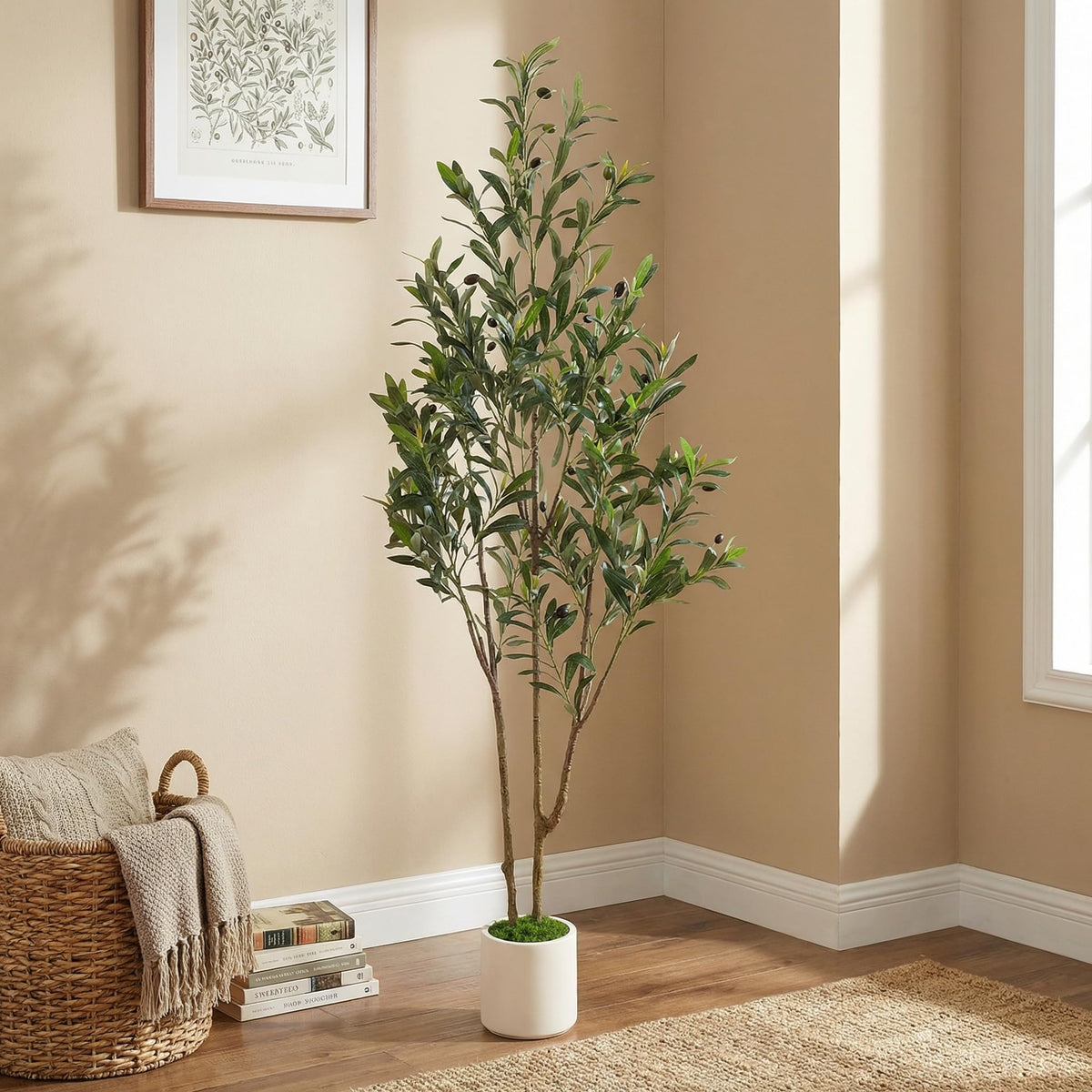
Use tall faux trees (e.g., olive or ficus styles)


Artificial Fiddle Leaf Fig Tree
-
Place in corners to create visual height
 Artificial Palm Tree
🚪 Entryway: first impression
-
Add a structured faux plant to brighten small spaces
-
Helps create a welcoming, clean aesthetic
 Artificial Camellia Tree-White
✨Shelves & desktops: layered styling
-
Small faux plants add texture without clutter
-
Ideal for mixing with books, candles, or decor objects
🐾 Pet zones: safe greenery
-
Decorate areas where pets frequently rest
-
Avoid real plants entirely in these zones
🧩Seasonal styling flexibility
Artificial plants can easily adapt to:
-
Spring florals
-
Autumn tones
-
Holiday décor
For pet owners, creating a home is no longer just about aesthetics—it’s about balancing beauty with safety.
Real plants can introduce hidden risks, while well-chosen artificial plants provide a practical alternative that reduces exposure to toxins while maintaining a natural, stylish appearance.
By selecting high-quality, pet-friendly artificial plants, you can enjoy greenery throughout your home with greater flexibility, less maintenance, and improved peace of mind. 🐾🌿