

For many of us, the dream of a lush, indoor urban jungle often clashes with a harsh reality: the "Black Thumb." Between managing a household, career, and family, keeping a finicky Fiddle Leaf Fig alive can feel like a part-time job you didn't apply for.
This is where the faux tree becomes a homeowner's best friend. In recent years, artificial greenery has evolved from the shiny, neon-plastic eyesores of the 90s into high-fidelity "real-touch" masterpieces. However, even the best faux tree can look "fake" if it isn't styled with intention.
If you are looking to elevate your home’s aesthetic on a budget, you don't need to spend $500 at a high-end boutique. You simply need to know the industry secrets to trick the eye. Here is your ultimate guide to making budget-friendly faux trees look like expensive, living centerpieces.
Why Faux Trees are the Ultimate Hack for Modern Homeowners
For the stylish homeowner, the transition to high-quality artificial plants isn't just about convenience—it's a savvy financial move.
-
Cost-Effectiveness: A real 6-foot Olive Tree can cost upwards of $200, only to die within three months if the lighting isn't perfect. A one-time investment in a quality faux tree lasts a lifetime.
-
Zero Maintenance: No watering, no expensive fertilizers, and no specialized UV grow lights.
-
Safety First: Many popular indoor plants (like Lilies or Sago Palms) are toxic to curious toddlers and pets. Faux trees offer the beauty of nature with zero risk.
What to Look for Before You Buy (The Quality Check)
Before we get into the styling, you must start with a decent foundation. When shopping for budget-friendly options, look for these three markers of quality:
1. Realistic Color Gradation
Nature isn't monochromatic. Avoid trees where every leaf is the exact same shade of green. Look for "new growth" details—lighter green tips and darker, older-looking leaves toward the center.
2. Texture and "Real-Touch" Materials
If you’re shopping in person, feel the leaves. They should have a slight waxiness or a soft, fabric-like matte finish rather than a hard, shiny plastic feel. For online shopping, zoom in on the photos to check for "veining" on the leaves.
3. A Realistic Trunk
The dead giveaway of a cheap faux tree is a perfectly straight, plastic-looking brown pole. Look for trunks that have texture, knots, and slight "imperfections" that mimic real bark.
7 Steps to Make Your Faux Tree Look 10x More Expensive
1. The "Ditch the Plastic Pot" Rule
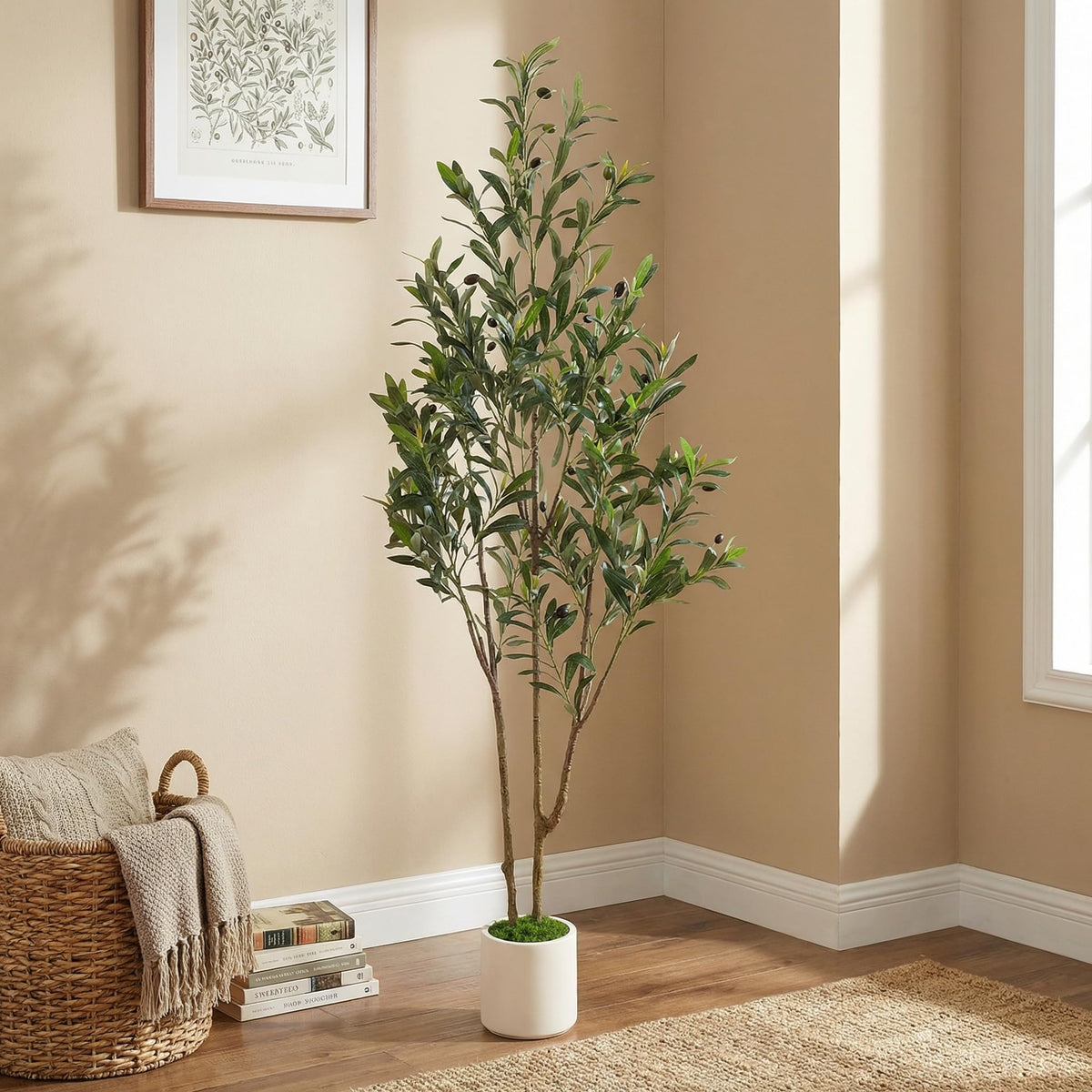
Almost every artificial tree arrives in a small, weighted black plastic pot. This is merely a base, not a decorative feature. To immediately upgrade the look, place that small pot inside a large ceramic planter, a stone crock, or a high-quality woven seagrass basket. Pro Tip: Choose a container that is at least 2-3 inches wider than the tree's original base to create a sense of scale.
2. The Power of "Fluffing."
When your tree arrives in a box, it will be compressed. Most people simply pull it out and stand it up. Don't do this. Spend 20 minutes "fluffing" the branches. Start from the bottom and work your way up. Bend the wire branches slightly downward and outward, mimicking the way gravity affects real heavy leaves. Look at photos of the real species online to ensure your "shaping" matches nature’s silhouette.
3. Use "The Secret Base" (Real Soil & Moss)
Nothing says "fake" like a plastic base. To fool the eye, fill the gap between your tree's base and your decorative planter with real materials.
-
Dried Spanish Moss or Preserved Forest Moss: This adds a lush, organic texture.
-
River Rocks or Pebbles: Perfect for a modern, minimalist look.
-
Real Dirt: Covering the base with a layer of actual potting soil is the ultimate "deception" that makes guests assume the tree is rooted.
4. The Height Hack: Give it a Boost
Budget trees are often slightly shorter than we’d like. If you bought a 5-foot tree but want a 6-foot presence, don't worry. Place sturdy cardboard boxes or floral foam inside your large planter to act as a "booster seat." Set your tree on top, then cover the gap with moss. This adds instant grandeur to your living room without the extra cost of a larger model.
5. Strategic Placement Near Natural Light
This is a psychological trick. We know that real plants need sun to survive. By placing your faux tree near a window or a glass door, you subconsciously signal to anyone entering the room that the plant is thriving because of the light. Avoid dark, windowless corners, which scream "this plant doesn't need light because it's plastic."
6. Cleaning for Realism
Real plants don't collect thick layers of gray dust. To keep the illusion alive, wipe your leaves down once a month with a damp microfiber cloth. For an extra boost, use a tiny bit of "leaf shine" spray (sold for real plants) to give them a healthy, hydrated glow.
7. The "Hybrid" Decor Strategy
The best way to hide a faux tree is to surround it with real ones. Place a few small, easy-to-care-for real plants (like Pothos or Snake Plants) on a table near your large faux tree. The "realness" of the small plants rubs off on the large one, creating a convincing green vignette.
Top 3 Trending Faux Trees for 2026 (Value-for-Money)
-
The Fiddle Leaf Fig (Ficus Lyrata): The "it" plant of the decade. Its large, sculptural leaves make it a perfect statement piece for a corner.
-
The Olive Tree: Ideal for those who love the "Organic Modern" or "Mediterranean" aesthetic. Its silvery-green leaves look incredibly realistic in faux form.
-
The Eucalyptus Tree: Best for smaller apartments or airy rooms. It offers a wispy, romantic feel that doesn't overwhelm the space.
Frequently Asked Questions (FAQ)
Q: Can I put my faux tree on a covered porch or patio? A: Yes, but check if it is "UV-resistant." Direct sunlight will fade standard artificial leaves over time, turning them a strange blue or yellow hue. If it’s not UV-treated, keep it in a fully shaded area.
Q: How do I remove the "plastic smell" from a new tree? A: This is common with new shipments. Simply leave the tree in a well-ventilated garage or a breezy room for 24–48 hours. You can also lightly mist the "trunk" (not the leaves) with a fabric freshener.
Q: Are faux trees environmentally friendly? A: While they are made of synthetic materials, their longevity makes them a "slow decor" choice. Unlike real plants that are often grown in heated greenhouses and shipped frequently, a single faux tree can stay in your home for 10+ years, reducing the carbon footprint of constant replacements.
Conclusion Creating a beautiful, high-end home doesn't require a green thumb or a massive bank account. By choosing the right faux tree and applying these simple styling "hacks"—like using real soil and proper fluffing—you can enjoy a vibrant, stress-free home that looks like it belongs on the cover of a magazine.