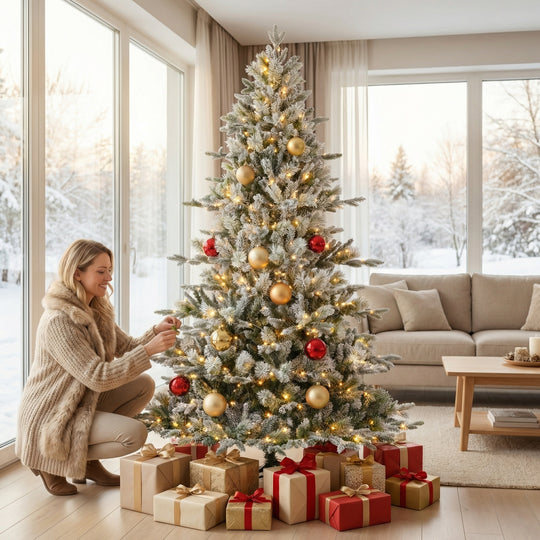

Choosing a Christmas tree isn’t just a seasonal decision—it’s a choice that reflects your home, lifestyle, and priorities.
Some households value the tradition and family moments of a real tree, while others prefer the convenience and long-term use of an artificial one. Both options offer distinct benefits and trade-offs.
This guide breaks them down clearly, helping you decide which type of tree best fits your space and everyday life.
The Charm of Real Trees 🌲

Real Christmas trees have been a staple for generations, offering tradition, family rituals, and a sense of warmth in the home.
-
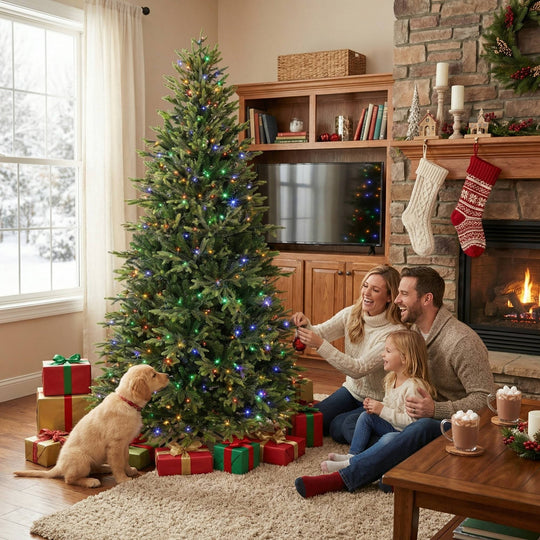
👪 Tradition & Family Moments: The process of choosing and decorating a tree can become a cherished family ritual, creating memories and bringing loved ones together.
-
♻️ Environmentally Friendly Options: Real trees are renewable and biodegradable. Tree farms in the U.S. plant millions of new trees annually to replace those harvested.
-
🚜 Supporting Local Communities: Buying a real tree often supports local farmers and small businesses, benefiting regional economies.
📝 Considerations: Real trees require maintenance—watering, cleaning up fallen needles, and proper disposal. Their beauty is seasonal, lasting only for a few weeks.
📊 Data Point: In the U.S., approximately 25–30 million real Christmas trees are harvested each year, mostly from tree farms.(according to new survey data released by the American Christmas Tree Association)
The Advantages of Artificial Trees 🌲

Artificial trees are increasingly popular in modern households, and for good reason.
-
⏳ Long-Term Value: A quality artificial tree can last for 7–10+ years, making it cost-effective over time.
-
🧠 Zero Maintenance: No watering, no needle cleanup, and no drooping branches — just unpack, set up, and decorate.
-
🐶 Allergy-Friendly & Safe: Ideal for homes sensitive to pollen or mold. Many artificial trees are also fire-resistant.
-
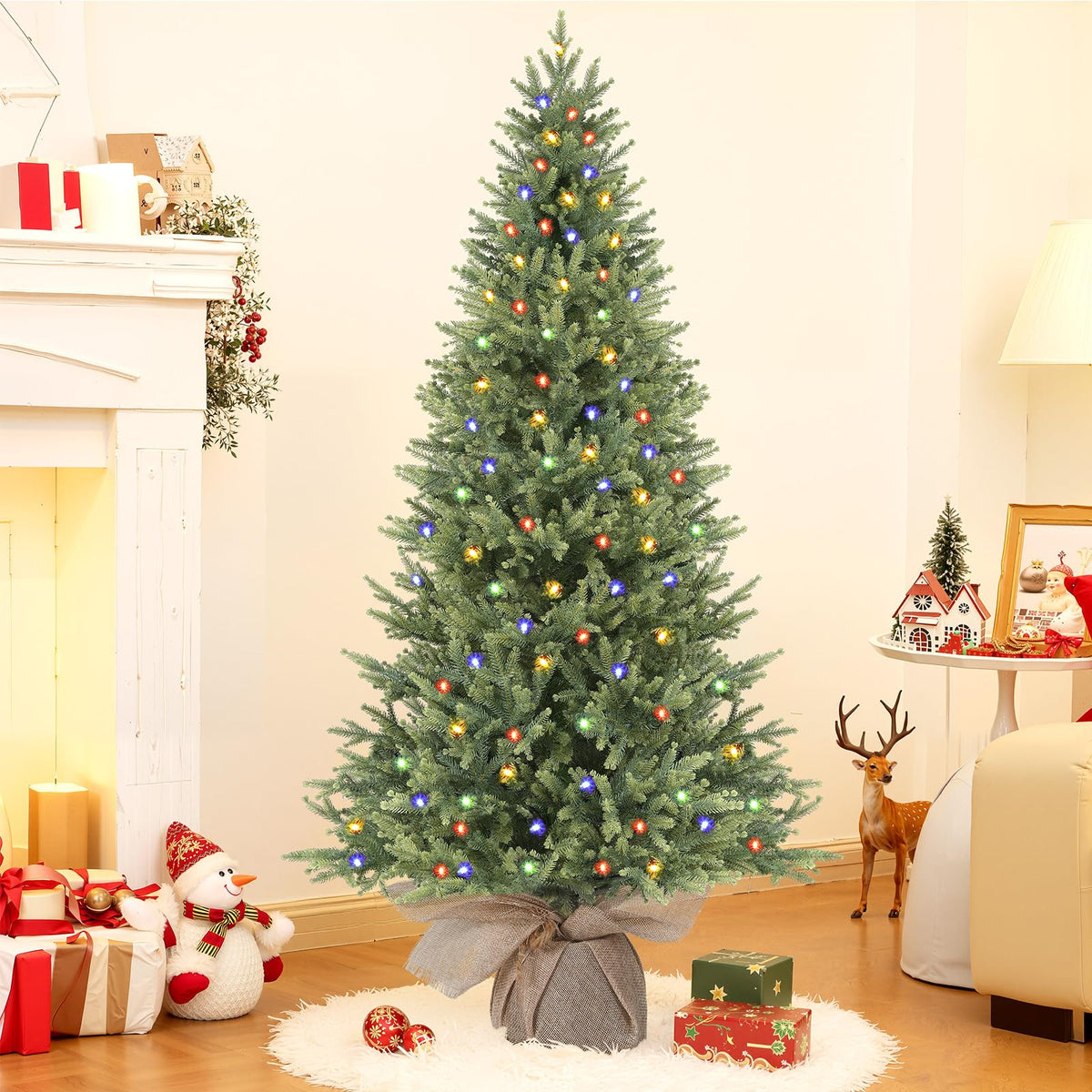
🌿 Consistency & Variety: From classic green to snow-dusted or pre-lit designs, artificial trees maintain perfect shape and fullness year after year.
-
🌍 Sustainability Over Time: Using the same tree season after season reduces overall waste and the environmental impact of annual harvesting.
📊 Data Point: Surveys show that in the U.S., around 83% of households displaying a Christmas tree choose artificial ones in some years, reflecting convenience and reuse preferences. (American Christmas Tree Association)
Real vs. Artificial ⚖️
| Feature | Real Tree 🌲 | Artificial Tree 🌲 |
| Pros | 👍 Authentic scent & traditional feel 👍 Biodegradable (mulch or habitat) 👍 Supports local farms |
👍 Easy setup & cleanup (no needles) 👍 Reusable for many years (7+ seasons) 👍 Fire-resistant 👍 Can hold heavier ornaments 👍 Often comes pre-lit |
| Cons | 👎 Needs regular watering 👎 Sheds needles 👎 Short lifespan (weeks) 👎 Potential fire hazard when dry 👎 May carry bugs |
👎 High initial production impact (energy & materials) 👎 Often made with PVC/lead 👎 Not easily recyclable 👎 Lacks natural pine scent |
Decision Factors to Consider 📝
Choosing the right tree ultimately depends on your lifestyle, home, and priorities:
-
📐Space & Size: Consider room dimensions and storage space.Artificial trees come in a range of compact sizes for small apartments or limited storage spaces.
-
💰 Budget: Weigh the cost of a one-time investment in an artificial tree versus annual real tree purchases.Real trees cost on average $45–$80 per season, while artificial trees are a larger upfront investment but can last for many years. (American Christmas Tree Association)
-
🛠️ Maintenance: How much effort are you willing to put into watering, needle cleanup, and disposal? Real trees need watering, needle cleanup, and disposal. Artificial trees are low-maintenance, saving time and effort.
-
👪 Tradition vs. Convenience: Some families value the ritual of a real tree, while others prefer the hassle-free experience of an artificial one.
-
🌍 Environmental & Safety Considerations: Sustainability, allergies, and fire safety may influence your choice.Real trees are biodegradable and grown sustainably, while artificial trees reduce yearly waste when used for multiple seasons. Fire safety and allergies may also influence your choice.
Conclusion
Whether you choose a real or artificial tree, the most important thing is the joy it brings to your home. Real trees offer tradition and natural charm, while artificial trees provide long-term convenience, consistency, and ease—perfect for modern living.
Ultimately, the best tree is the one that fits your lifestyle, your home, and your needs—bringing beauty, comfort, and a sense of togetherness year after year.